


.jpeg)




.jpg)

Investment themes where we see enduring opportunities for innovation and growth.






Founded by generosity. Driven by possibility.
Integrated private and public
An evergreen structure lets a single team follow a company from its first institutional round into the public market and hold it afterwards. Nothing is handed off; the insight compounds with the position.
Unique perspective across all stages of growth.
Long-term partners from inception to IPO and beyond.
Concentrated, long-biased, catalyst-based approach.
What we’re reading and thinking
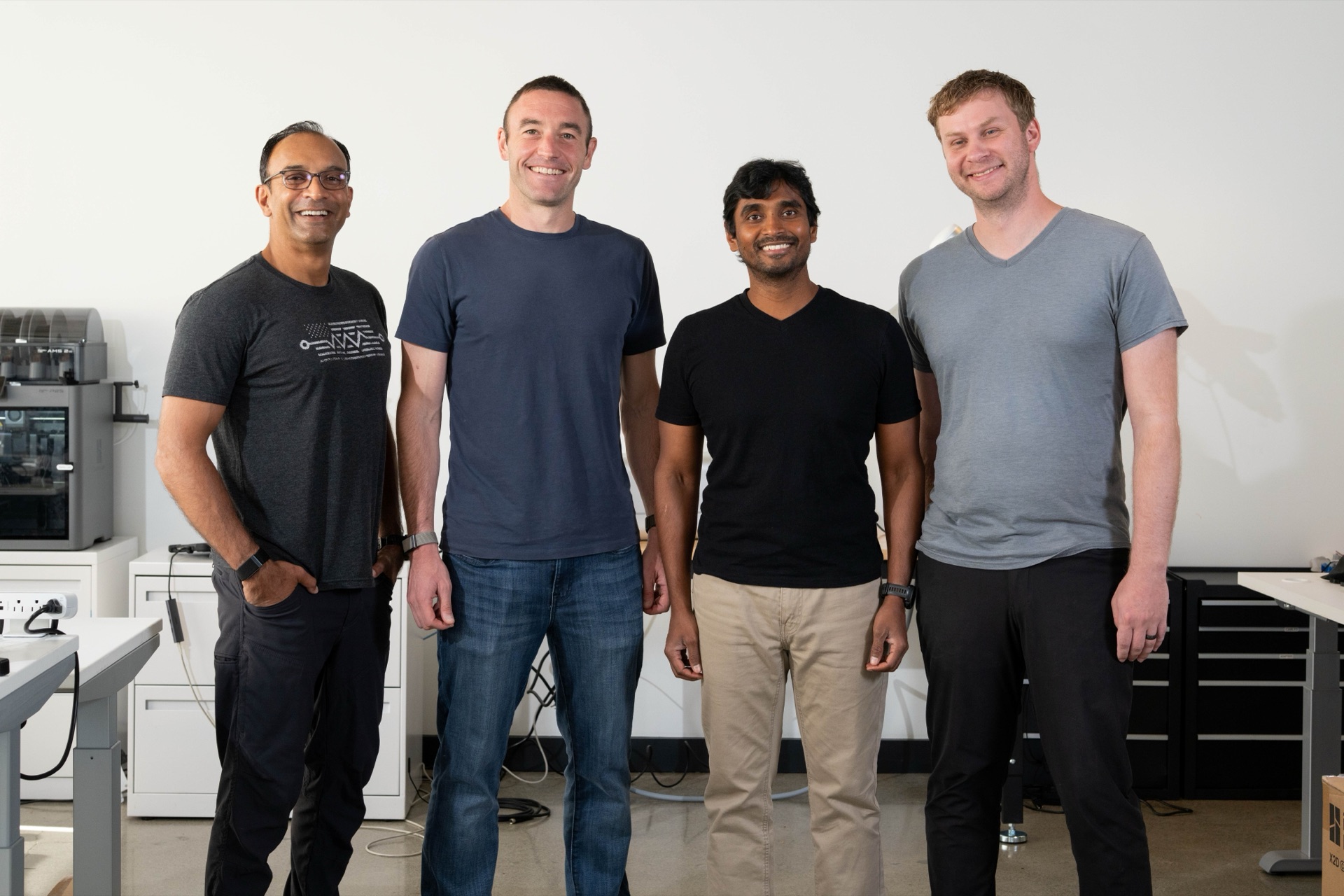
Where every experiment makes the next one smarter. Why we invested in Warp Sciences.
Every failed reaction teaches something, when the lab is built to remember.
AI can now reason about chemistry. What it lacks is evidence from the real world, including the reactions that fail. Warp is building the labs to provide it, starting with work drug developers already need.
Today we are announcing our investment in Warp Sciences. Warp brings AI, robotics and chemistry together to help the industry discover new medicines faster, and to build the capacity to do that in America. Every experiment runs to a common standard, so the lab learns as it works and, over time, helps scientists reach answers sooner.
The short version of why we invested is simple. Warp does exceptional science for drug developers from the first day, and every experiment makes the next one smarter.
Infinite designs, finite labs
Most ideas worth pursuing never reach the lab bench.
Computation has scaled by orders of magnitude in a generation. Experimentation has not, so the industry tests only a fraction of the ideas worth pursuing.
The slow step is making the molecule. A chemist can design a new compound in an afternoon, but making it usually takes weeks1. Every round of design and testing waits on that step, so programs spend much of their time waiting on chemistry.
The catch is cost. Synthesis and experimentation require a lab, instruments, reagents and scientists. Building a lab mainly to train models means paying for experiments long before there is a paying customer. This approach can work, but it tends to produce binary outcomes.
The right experiments, not just more of them
Value in AI for biology is moving to whoever owns the experiments behind the model.
Models that predict how proteins fold, and increasingly how molecules bind, have become readily available, so a general-purpose model is less of a differentiator. But binding is only the start. The harder questions are how potent and safe a molecule will be and how it can be made. Today’s models still struggle with them. That is not an algorithm problem but a data problem. The models that stay ahead will be the ones that learn from experiments only their builders can run.
Published chemistry data disproportionately records what worked. Failed reactions and their conditions mostly sit inside individual companies, in forms never meant to be learned from. A model trained only on successes is like a student who has only ever seen the answer key. It can recite answers, but it struggles with a question it has not seen.
Historical data has a second problem. It was generated to test someone else’s hypothesis, and sometimes it points to the wrong answer. Early mouse experiments credited IL-12 with autoimmune inflammation, but they could not separate it from a related cytokine, IL-23. Experiments that did so showed that IL-23 drove disease in those models2. That correction led to drugs such as Skyrizi, which gives about three-quarters of psoriasis patients near-complete skin clearance3 and sold $17.6 billion in 20254. More analysis cannot substitute for an experiment that distinguishes competing explanations.
This is a thesis we keep returning to. We back companies that own the data their models learn from rather than renting it. BigHat runs its own design and testing loop for antibodies, and Enveda built instruments and chemistry to read a corner of nature others could not. Both use those loops to discover drugs for their own pipelines and partners. In each case the model improves because the company controls the experiments, including the ones that did not work.
Warp applies the same idea in a different way. Instead of feeding one pipeline, its lab does real science for many drug developers from day one, so what it learns is grounded in the problems the whole industry needs solved.
Built on real work from day one
Warp starts with work drug developers already need, then builds the platform around it.
Warp begins by making variations of promising molecules so scientists can compare them as they search for a drug candidate. It is established work with real budgets behind it. Experienced chemists will lead the work, and Warp plans to support the full scope of what its customers need rather than only the steps that are easiest to automate.
The work itself sets the standard. Every experiment follows a documented protocol on calibrated instruments, with the conditions and results recorded. A research lab treats this as good hygiene. Warp treats it as the product, because it is what makes results reliable, comparable across runs and useful to the next experiment.
Most labs run each project in isolation, so the lessons from one rarely carry over to the next. Warp is built so its lab gets better with every project, learning from what does not work as well as what does. It also plans to run its own experimental campaigns designed to probe where chemistry breaks.
Automation comes in progressively, as the work justifies it, so the lab grows with demand rather than ahead of it. As DJ puts it, “We’re not developing drugs of our own. We’re building the infrastructure for the people who do.” Each stage of the business is designed to fund the next.
Why this works now
Three shifts had to land at the same time.
- Automation became practical. Lab robotics and analytical instruments are now modular and affordable enough to automate a full chemistry workflow on a facility budget.
- Models can now learn more from the data. Today’s chemistry models can use structured experimental records to predict reactions and guide the next experiment across a wider range of problems.
- The demand already exists. Warp is not asking customers to try something new, and many want trusted capacity in the United States for their most sensitive programs.
The fourth ingredient, and the hardest to find, is the team.
A founding team that covers the whole loop
Frontier AI, robotics, data at national scale and real medicinal chemistry rarely sit in one founding team.
Building an AI-run lab requires these skills to work together, from experimental design through execution and model training. Without that, a lab can produce data no model can use, or a model can lack reliable data to learn from. Warp’s team covers all of them.
- Kevin Weil, CEO, was most recently VP of Science at OpenAI and, before that, Chief Product Officer, leading the teams behind ChatGPT, Codex and the OpenAI API. He previously led product at Instagram and Twitter.
- DJ Patil, COO, was the first U.S. Chief Data Scientist, where he worked on the Precision Medicine Initiative and the Cancer Moonshot. He was on the founding team of Devoted Health as CTO and helped coin the term “data scientist.”
- Sol Reisberg, CSO, was VP and Head of Chemistry and CMC at Terremoto Biosciences, where he led the chemistry team to five IND-stage molecules. He earlier held medicinal chemistry roles at Schrödinger and Gilead and trained in Phil Baran’s lab at Scripps. He has been a customer of the kind of lab Warp is now building.
- Manohar Paluri, CTO, spent 14 years at Meta, where he was a founding member of FAIR, led work on the Llama models and most recently served as a VP in Meta Superintelligence Labs. His doctoral research at Georgia Tech was in robotic mapping and perception.
Early hires add robotics experience from Genesis, Skild AI and 1X, and scientific depth from Genentech and Lawrence Livermore National Laboratory.
What stood out to us was how clearly the team named the weaknesses of its own model, starting with the gaps in the data the field has today, and how it built the plan around fixing them.
What we look for, and how we show up
A note for founders building at the intersection of AI and science.
Building a model alongside a lab is hard to get right. These are the four questions we ask every founder who is trying.
- Was your data generated to answer your question? Targeted experiments, run to a consistent standard and checked against reality, are how a model learns what is true rather than what was recorded.
- What does your loop learn that others miss? In chemistry, that is the failed reaction and the conditions behind it. Every field has its own version.
- What number proves it is working? From its first programs, Warp will be able to measure cost per experiment and turnaround time against a known market price. A falsifiable number earns trust faster than a large vision.
- Can each stage stand on its own? A plan where every phase is a real business that funds the next is more durable than one where all the value arrives at the end.
Companies like Warp take patience. The lab has to earn trust before automation pays off, and the largest returns come years later. We invest from evergreen capital, so we are not working to a fund clock. Our team also spends its time in the science, not only on the spreadsheet. We back founders whose ambition is measured in decades, and we stay alongside them through every stage.
A lab that keeps getting smarter
The first steps are concrete, and the ambition is much larger.
In the near term, Warp will stand up its first lab, take on its first customer programs and apply its documentation standard from the first run. Over the medium term, we expect cost per experiment to fall as automation takes on more of the workflow. Over the long term, the ambition is AI that works alongside scientists. A chemist describes the molecule a program needs, and the system designs the experiments, directs the lab and learns its way toward an answer.
The model gets better only if the lab keeps running, and the lab keeps running because it does work drug developers value. We think that is the right order of operations, and we are proud to partner with Kevin, DJ, Sol, Mano and the Warp team as they build it. For the patients waiting on new medicines, a faster path from idea to answer is what matters most.
1 Nippa DF et al. Accelerating compound synthesis in drug discovery: the role of digitalisation and automation. RSC Medicinal Chemistry, 2025;16:5753-5764. See also onepot CORE, an enumerated chemical space to streamline drug discovery, enabled by automated small molecule synthesis and AI. arXiv preprint 2601.12603, 2026.
2 CuaDJ et al.Interleukin-23 rather than interleukin-12 is the criticalcytokine for autoimmune inflammation of the brain. Nature, 2003;421:744-748.
3 GordonKB et al.Efficacy and safety of risankizumab in moderate-to-severe plaquepsoriasis (UltIMMa-1 and UltIMMa-2): results from two double-blind, randomised,placebo-controlled and ustekinumab-controlled phase 3 trials. The Lancet, 2018;392:650-661. In both trials, about 75%of patients on risankizumab reached PASI 90 at week 16, compared with 42% to48% on ustekinumab, with maintenance dosing every 12 weeks.
4 AbbViereports full-year and fourth-quarter 2025 financial results. Press release, February 4,2026.

Code validation: the next billion-dollar layer in software
Introduction
Every time code is written or changed, it has to be checked before it ships. This includes building the binaries, running the tests and making sure nothing broke. Code validation (or CI) has always existed and AI is making it the most acute problem in software.
Blacksmith is becoming the de facto code validation platform for teams shipping with AI, and we are thrilled to invest in their Series C. As we did the work, we kept hearing the same three questions: (1) Wait... wasn't CI dead? (2) But how big can this get? (3) What about competition?
We think the community gets most of them wrong. Here is how we think about them.
Community question #1: Wait... wasn't CI dead?
This is the first thing people say, because they are looking at the wrong layer. The orchestration layer of CI was always thin and did not hold much value on its own. Incumbents bundled it, because CI sits next to where the code lives. That made it hard for an independent company to exist.
The infrastructure underneath, however, was always a large business. Teams ran CI on the same building blocks they used for everything else, and because code volumes were small, that worked fine.
That infrastructure is now breaking, and three things have changed. The first is the sheer volume of code. Agents write code in seconds, and every line still has to be built and tested before it ships, so more code means more validation.
The second is the size of the peaks. CI has always been bursty, with jobs that spike, run for a few minutes and get thrown away. When code volumes were small, those spikes were easy to manage. Now agents work in parallel and around the clock, so the load is busier and the spikes are much larger. Infrastructure built for other workloads is starting to break under it.
The third is the cost of waiting. Teams now spend heavily on AI tokens to write code, and every minute that code sits in a queue wastes that spend. Performance and reliability matter more than they ever have.
So CI was never dead. It has simply always borrowed infrastructure built for other workloads, and nobody has built infrastructure made for code validation. That is the opportunity, and Blacksmith is building the first dedicated layer.
Community question #2: But how big can this get?
Since this layer has never existed before, the natural question is how big it can get. History is a useful guide here. The most successful developer and infrastructure software companies, such as Datadog, MongoDB, Atlassian and GitLab, shared four traits. They had strong product-led growth and deep developer love, a fast time to “aha”, a platform shift to ride and, once they had earned it, the right to build a suite of products.
Blacksmith has the same ingredients. Developers love it and adoption starts bottom-up, because the value is almost instant and obvious. Switching takes a one-line change. It is riding one of the most significant platform shifts in history, and it has earned the right to build a suite of products around its core.
The big difference is the size of the tailwind. For those companies the shift was cloud and SaaS, while this one is AI, which is far larger. For the first time, not one but multiple companies are expected to IPO at a trillion-dollar valuation, which is a testament to how big this shift is.
Blacksmith benefits as AI usage grows. Whether open or closed models win, which lab comes out ahead and which use case takes off does not matter, because a large and growing share of tokens become code, and that code has to be validated before it ships.
Those tokens are growing fast. Google went from about 480 trillion tokens a month in May 2025 to about 3.2 quadrillion in May 2026, roughly 7x in a year. On OpenRouter, programming grew from about 11% of tokens in early 2025 to more than half by late 2025.
Given all of this, we believe Blacksmith can reach $1B in revenue faster than any of the prior generation developer and software infra companies did.
Community question #3: What about competition?
A prize this large draws the obvious pushback, which is whether the incumbents will simply take it. We think competition is the wrong question and that the right question is share. As agents scale, validation compute grows with them, so the real question is how much of it goes to a specialist and how much stays with the default. Our bet is that a larger share goes to the specialist, for four reasons.
First, incumbents optimize for something else. Their infrastructure serves their core products and steady, long-running work, so validation is a side workload for them. For Blacksmith, it is the whole business.
Second, incumbents do not always win. Snowflake won despite incumbents that already had the customers and the lock-in, and Datadog grew despite free monitoring tools bundled into every cloud account. In both cases the specialist was clearly better at the one thing customers cared about, worked across platforms rather than tying customers to one, and treated as its whole business what the incumbent treated as a feature. Blacksmith has the same profile.
Third, the specialist complements the default rather than replacing it. Blacksmith plugs into the tools teams already use, so teams keep their workflow and switching is a one-line change.
Fourth, the stakes keep rising. The more code agents write, the less "good enough" is good enough.
Onwards
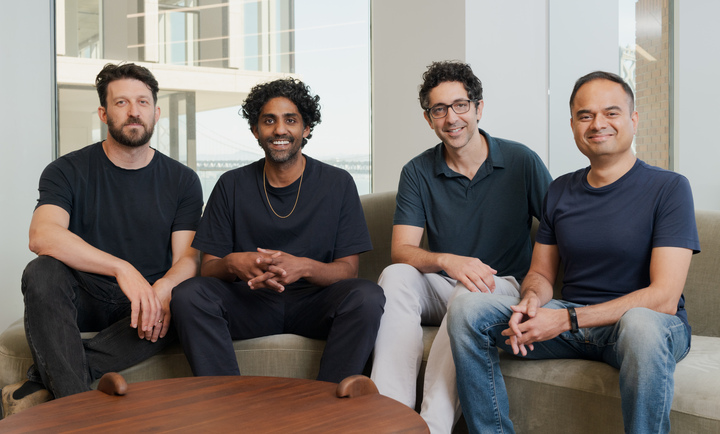
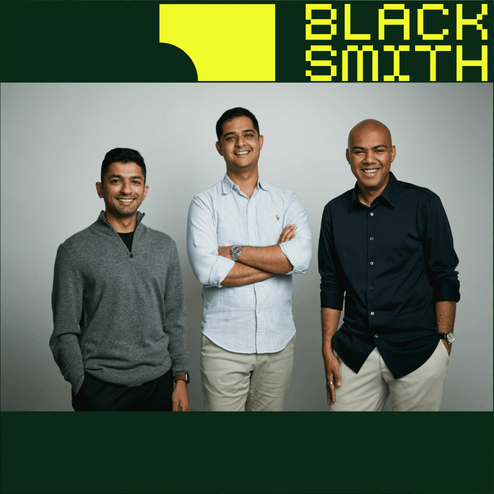
Blacksmith is a bet on how much code gets written, not on which model wins. But more than anything, it is a bet on a team we are incredibly excited to back. Aditya Jayaprakash (JP), Aayush Shah and Aditya Maru have been friends for a decade, since they met as undergrads at the University of Waterloo. Aayush and Maru went on to be early engineers at CockroachDB, building one of the hardest distributed databases in the world, while JP was an engineer at Faire. They are developers themselves, so they have lived the pain they are solving, and they are true first-principles thinkers. Rather than accept the infrastructure everyone else used, they went down to the metal and rebuilt it for this workload. Every conversation we had with them left us more convinced that this is the team to build the code validation layer.
We are thrilled to back them in their Series C, alongside Sequoia, PeakXV, GV and Y Combinator.


Everyone's asking the same chatbot. Why we invested in Catalyst.
In 2004, we made an early bet on the National Stock Exchange of India. The conviction was simple: India deserved electronic trading rails, not a trading floor. NSE's daily cash turnover has since grown nearly 18x. Better rails brought in more investors, and those investors got more sophisticated as the market grew around them.
We've seen that pattern play out in every market we've watched. Lower the friction, and more people show up. Give them better tools, and the market gets smarter with them.
So here's a question. You think a super El Niño is coming this winter. What's the trade? Coffee? Cocoa? Fertilizer stocks? A prediction market on hurricane counts? Which venue? What size? What's the hedge? When do you get out? By the time you've worked through all of it, the move already happened. Most people never place the trade at all.
That's what Catalyst fixes.
Why is the trade still handmade?
Every generation of trading killed exactly one friction. Screens killed the floor. E*Trade killed the phone call to your broker. Robinhood killed the commission. Newer venues killed market hours and opened up asset classes that didn't exist ten years ago.
Nobody killed the hardest one: turning an idea into a position. Ideas are fuzzy, qualitative and cross-asset. Execution is mechanical and venue-specific. At a hedge fund, that gap gets closed by analysts, quants and an execution desk. Everyone else closes it with a spreadsheet, five browser tabs and hope.
We see this gap up close. As a crossover firm, Premji Invest runs a public markets team alongside our private investing practice. Every day, that team does the work Catalyst is automating: turning a view on the world into positions, sizing them, and watching for the signal that says the thesis has changed. That gave us an unusual lens in diligence. We weren't just evaluating Catalyst as software. We were asking whether it could do the job our own investors do, and where it would break.
What is Catalyst?
Catalyst is the execution desk most people never had. You type what you believe, literally "El Niño, what's the trade?", and Catalyst's agents research the idea, pick the instruments and venues that best express it, and hand you a strategy you can read before anything runs.
And it doesn't stop at the order. Each strategy is a standing workflow that watches the market for you. If a major outlet reports X, take the position. If another contradicts it, unwind. Take profit here, stop-loss there. Prediction markets, equities, options, perps, sentiment, fund flows and news, all in one interface.
Why not just let the AI trade?
This is the part of the company we spent the most time on in diligence.
Most AI trading products we've seen put the model in the loop. Every time the market moves, the LLM looks at the state of the world and decides what to do next. That's fine in a demo and a problem with real money. Inference on every tick gets expensive fast. Models still fumble a small share of tool calls, and on a $100K account even a rare mistake is a lawsuit. And when the agent sells something at 3am, there's no clean way to reconstruct why.
The fallback most teams reach for is a library of canned strategies. Safe, but nobody's actual thesis fits in a template.
Catalyst does something different. The model writes the strategy, and then it's done. When you create a strategy, the LLM turns your idea into a program, a fixed set of signals, thresholds, venues and actions, that you can read before it ever touches your money. From then on, that program runs on its own. Dylan's framing is that models are great at writing code, so you should treat every agent like a script.
That choice drives the economics too. Catalyst pays for intelligence once, when a strategy is written, not every time it trades. Cost grows with the number of ideas on the platform, not with volume. Today, the inference bill for the whole platform rounds to zero.
Whose edge is it?
There's a second problem with most AI trading tools, and it's a bigger one. LLMs are built to give the most likely answer and to agree with whoever is asking. That's the opposite of what a trader needs. If a million people ask a chatbot for the El Niño trade and get the same answer, that trade is crowded before anyone places it. Consensus isn't alpha.
Catalyst starts from the other end. The thesis is yours. Catalyst's job is to sharpen it and carry it out, not to swap it for the internet's average opinion. It puts the data in front of you, from prediction market odds to positioning, options flow and sentiment, so you can see what the market already believes and whether your view is actually differentiated. Then it executes what you decided, not what the model would have preferred.
The best traders we know don't want an oracle. They want their own judgment, executed faster and more precisely than they could manage by hand.
What's the catch?
If this were easy, every brokerage would have shipped it already. Three things make it hard.
First, data. There are maybe twenty core actions in all of trading: long, short, swap, hedge, rebalance. Strategies don't win on exotic execution. They win on signal: order-book depth, an obscure news thread, crop yields, satellite imagery. Catalyst pays for that long tail and wraps it in its own query language so agents can compose across all of it. Every strategy users build teaches Catalyst which signals actually matter. That's the moat, and it compounds.
Second, trust. Nobody hands their money to a black box. Catalyst never takes custody. Keys sit inside hardware-isolated enclaves that Catalyst's own code can't read, and every trade executes at an established third-party venue or broker. Catalyst is software, not a broker.
Third, incumbents. Big brokerages could build agentic features. But a neutral layer that routes across dozens of venues and asset classes is genuinely hard for any single platform to build. In Catalyst's architecture, every venue is just a swappable adapter. Our bet is that a lot of incumbents end up as distribution partners, not competitors.
Our thesis
The consensus take is that AI in trading is a feature. Incumbents bolt a chatbot onto the app and call it a day. We think that's wrong.
Interface shifts crown new winners. The floor brokers didn't build E*Trade. E*Trade didn't build Robinhood. Every time the interface changed, the company that defined the new one won the next generation of traders. The agentic interface will be no different, and it'll be won by whoever makes AI trustworthy enough to touch your money.
The twist is that Catalyst doesn't have to beat the venues to win. It routes to them. Twenty years ago, we backed the rails. Now we're backing the interface that sits on top of all of them.
The team, and the signal
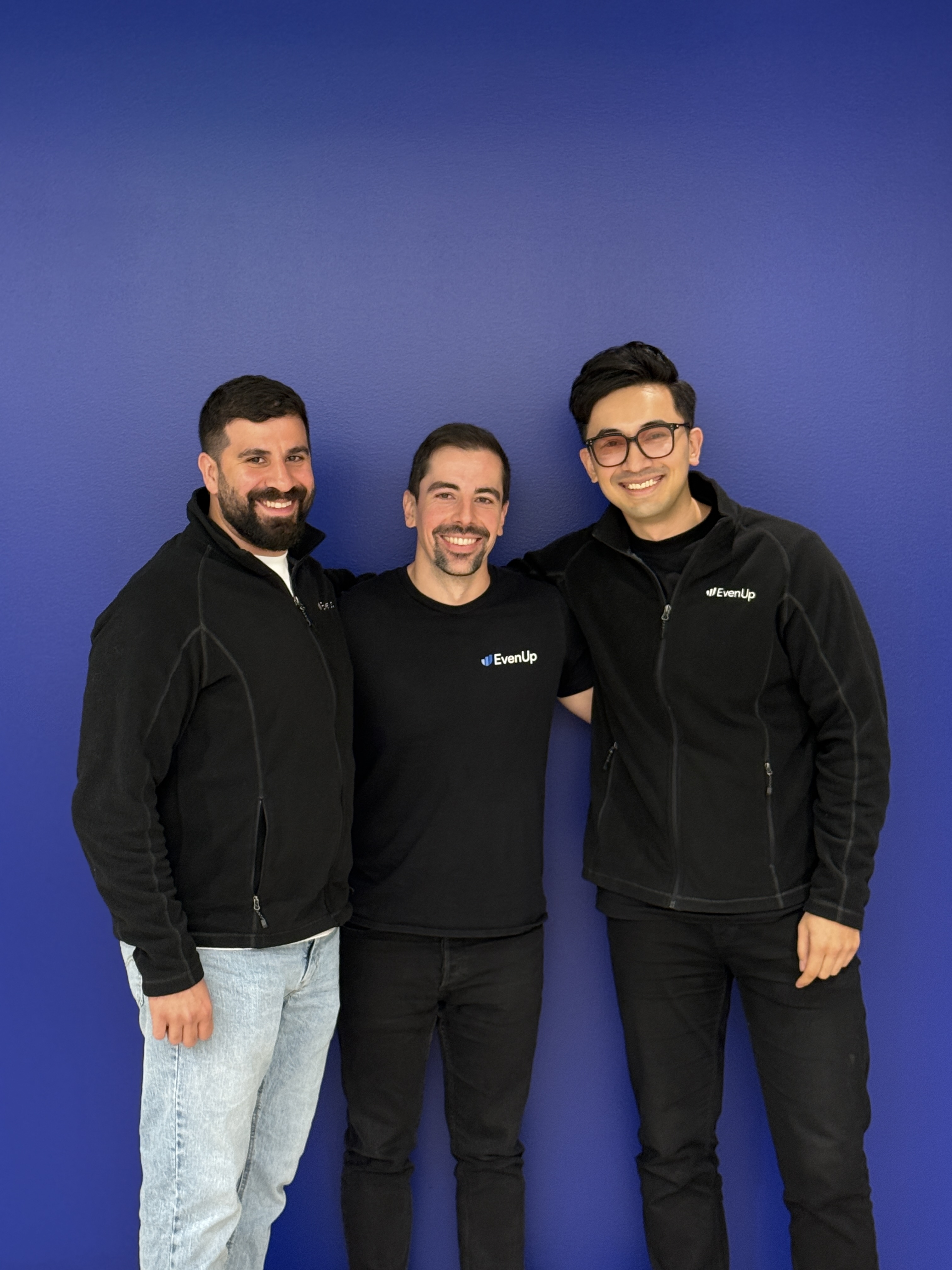
This is one of the spikiest teams we've met. Dylan Iskandar was an AMP Scholar at Jane Street, built and ran his own trading operation before he finished high school, and did formal verification research at Stanford before dropping out to start Catalyst. He's lived the exact workflow he's automating, and his obsession with provable, deterministic systems shows up everywhere in the product. JZ (Justin Zheng) worked on the early protocol that became Worldcoin as a teenager and is one of the most connected operators of his generation in the Valley. The two met through Tyler Cowen's Emergent Ventures when Dylan was in tenth grade. The rest of the team is Math Olympiad and quant-firm alumni.
In Closing
Every shift in trading removed one layer of friction. Catalyst is going after the last and hardest one: building the trade itself. We're thrilled to back Dylan, JZ and the team alongside Sequoia, Jump Trading, Selini Capital and a bench of traders and AI researchers who are also some of Catalyst's earliest users. Onwards.
.png)
Why We Invested in CScale for Reliable Scale-Up Optics
Premji Invest is excited to announce our investment in CScale, which is building a new optical interconnect architecture for scale-up networks.
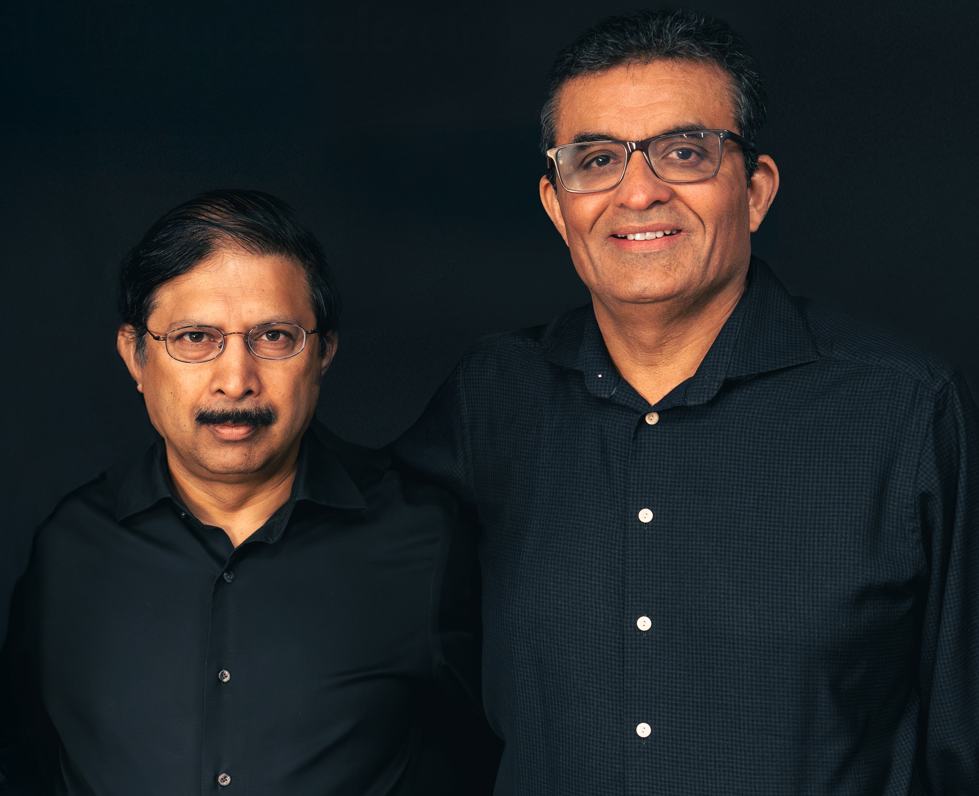
We have been consistently impressed by the depth and breadth of CScale's team, particularly their focus on the hardest problems gating broader adoption of optical interconnects. Martin Lund brings decades of experience building networking silicon and infrastructure at datacenter scale, while Sanjai Kohli has spent his career building communications and computing systems. The broader team spans high-speed electronics, photonics, packaging, and software. That range of experience gives the team the perspective to approach the optical interconnect problem from first principles and design around what it actually takes to deploy these systems commercially.
As datacenters scale, interconnect architects must design for higher throughput and bandwidth density within tighter reliability, power and cost constraints. While scale-out networks have already moved substantially towards optics, scale-up fabrics remain largely electrical. However, as copper reaches its physical limits, optical scale-up will become increasingly necessary to sustain further power and cost improvements in future rack architectures. Unlike copper, fiber offers a vast pool of spectrum allowing more throughput within the same physical footprint.
Our work across the category has led us to a broader conclusion that commercial viability will not be defined by a single component-level innovation alone. This is fundamentally a systems problem, where manufacturability, serviceability, reliability, and system-level operation need to be treated as primary design requirements alongside raw performance.
The industry has historically been undercapitalized, but it has made meaningful progress over the past few years in advancing the capabilities of optical devices. As such, we expect large customers to experiment with a range of approaches, both internally and through external partnerships, before committing meaningful commercial volumes to any one solution. With that in mind, we evaluated the category through a few first-principles checks.
Components must be co-optimized and integrated as a complete system to support the requirements of mass deployment
Several existing approaches in the industry focus on individual components (e.g. faster modulators, higher-powered lasers, or differentiated material systems). But as we worked through the requirements of deployment at scale, we found that preserving component-level advantages can require burdensome tradeoffs elsewhere in the system. For example, a highly performant modulator may compromise packaging yield or thermal stability. A novel, power-efficient light source may introduce crosstalk when densely integrated. A novel material platform may prove difficult to yield at high volumes. Conversely, a disaggregated approach shifts the burden of integration, validation, serviceability, and support to the operator, adding substantial operational overhead and technical complexity.
One architectural path we examined relies on dense arrays of optical resonators such as microring modulators. In isolation, these resonators look attractive because of their compactness and efficiency. The challenge is maintaining stability as these resonators are densely integrated. In this format, thermal crosstalk and wavelength drift become a coupled, system-level control problem, increasing the demands on tuning, calibration, and thermal management. In our view, this may not be the optimal tradeoff for deployment at scale. The key question is whether these architectures can be manufactured at high yields and perform reliably in the field, especially as designs become densely multiplexed and production volumes rise.
The optics industry has learned many of these lessons in past cycles. Technologies can appear compelling in an early demo or at the subsystem level, but become harder to qualify, manufacture, and operate reliably in the field. Our work reinforced that in photonics: strong component-level performance may not be enough to drive commercial adoption.
We saw much of the same thinking in our early conversations with CScale. The team's approach began with the full set of requirements for a scale-up fabric that could actually be deployed and operated at scale. The result is a product that combines proven photonics process know-how with an architecture designed around the practical realities of optical systems, including thermal instability, aging, process variation, and component failure. Manufacturability and serviceability are built into the design from the start. That approach closely matched the conclusions we had reached through our own work and further underscored CScale's differentiation.
Reliability is mission-critical for scaled commercial deployments
Bandwidth, power, and reach tend to dominate discussions around new optical devices. We think reliability is just as important, and one of the biggest challenges to solve for broad adoption of scale-up optics.
At datacenter scale, optical components are inherently difficult to manufacture and operate reliably. Unlike CMOS, optical systems require different materials and components (e.g. lasers, modulators, fibers) to be integrated and precisely aligned across multiple manufacturing steps, many of which can be difficult or impossible to rework. Small alignment errors or wavelength shifts can degrade link performance, while adding more components can compound yield and reliability challenges.
Those challenges do not end at manufacturing. Optical component behavior is sensitive to environmental conditions, and failures can be difficult to isolate or reproduce. As optics moves closer to the compute package, engineers cannot depend on flawless operation of every component. The system must be able to monitor link health, diagnose degradation, and continue operating when individual components fail.
The cost of failure is especially onerous at cluster scale. Low failure rates at the component level can create a substantial operational burden across the enormous number of links in a modern AI cluster. And because these workloads are tightly coupled, a single degraded link can create cascading stalls and significant losses in compute utilization. A clean eye diagram in the lab or a strong component-level reliability result is not enough for commercial viability. What ultimately matters is whether the full system can be relied upon under real operating conditions.
CScale has designed its system with these challenges in mind across the full product lifecycle, from manufacturing and initial deployment through real-time optimization and failure management. The goal is higher cluster availability, simpler operations, and ultimately more confidence for engineers to scale beyond the limits of legacy interconnect.
Spectrum is abundant
At a high level, the throughput of an optical link depends on two things: how much spectrum is used and how many bits are transmitted through each unit of spectrum. The industry has made strong progress in advancing spectral efficiency, and in datacenter optics, these gains can help address the density constraints imposed by limited package perimeter and shoreline availability. However, we believe that overly relying on higher symbol rates and more complex modulation may be the wrong approach for short-reach scale-up. Accordingly, we see potential in product roadmaps which can more effectively exploit the vast spectral headroom provided by optical fiber within the packaging and power constraints of the system.
In a medium with abundant spectrum, maximizing bits per second per hertz should not necessarily be the primary goal. Denser modulation or higher symbol rate scan make signals more fragile, consume more power, demand heavier error correction, and reduce tolerance for thermal drift, crosstalk, manufacturing variation, or loss. In short, higher-throughput lanes do not necessarily result in a more robust system. One logical alternative is to use more of the available optical spectrum while keeping each channel simpler and easier to manage. The opportunity is to trade abundant spectrum for better signal integrity, lower latency, and greater operating margin.
Ultimately, CScale's technical depth and systems design judgment were central to our conviction. As optics moves into the scale-up fabric, we believe commercial viability will depend increasingly on building reliable, well-optimized systems, not just higher-performing components. We are excited to partner with CScale as the team builds for that future.
Backing Foundational Shifts with Patient Capital - NSE's Monumental Journey
When we made an early investment in the National Stock Exchange (NSE) back in 2004, we had a clear conviction - to drive the country's growth potential, India deserved a powerful electronic equity trading architecture with a multitude of quality instruments.
Between 2000-2005, NSE had launched 1) index options based on the NIFTY50 index for trading, 2) single stock futures and options on listed securities, 3) ETF listings, and 4) NIFTY bank Index derivatives (*). NSE's pioneering actions were clear signs of an emerging leader that supported our conviction.
To give some perspective of the journey we saw: the average cash daily turnover of NSE has grown to INR 1130 billion (2024-25) from just INR 63 billion (2005-2006); the number of securities grew to 6,381 from 1,288 in the same period(**). Market maturity, proactive regulation and policy changes supported; as did retail participation and digital adoption, causing transaction volumes to explode. This journey was certainly not without its ups and downs with global and local events pulling against India's potential.
Our evergreen, patient capital allowed us to stand firm alongside the business without wavering, proving that long-term backing yields disproportionate success.
Today, NSE’s pre-eminent standing is validated by an impressive, world-class roster of anchor and institutional investors. Marquee global and domestic institutions—including the Life Insurance Corporation of India (LIC), Monetary Authority of Singapore (MAS), Abu Dhabi Investment Authority (ADIA) and Goldman Sachs serve as a testament to the exchange's incredible success and systemic importance. NSE has seen overwhelming investor interest for debut on bourses with a market cap of approximately INR 4.4 trillion at the upper end of price band and over subscription by 5.7x, making it amongst the largest demand generators in the recent times for OFS on listing.
Partnering through this monumental journey has provided us with invaluable structural insights into India's financial services development and a blueprint for navigating complex regulatory landscapes. We are actively channeling this deep operational fluency into our next frontier: backing early-stage deep tech business models, tokenization, and next-generation financial rails.
For visionary founders building in heavily regulated, technically complex spaces, our track record shows we don’t just fund such vision—we stand beside you and actively support your journey to reach the inflection point.
(*) History & Milestones - NSE India;
(**) Live Analysis - Capital Turnover & Business Growth - NSE India


Beyond binding: why we co-led BigHat Biosciences’ Series C
Few companies in AI-driven biology have carried a molecule of their own into a patient. Fewer still have done it on a format most of the field has not attempted. BigHat Biosciences has done both, and today it announced a $75 million Series C, co-led by Premji Invest and DFJ Growth, to do it again.
BigHat is an AI-native biotech that pairs frontier AI with an autonomous, high-throughput wet lab to design and develop next-generation protein therapeutics. Its platform has now produced two wholly owned programs: BHB810, a CDH17-directed antibody-drug conjugate for gastric and other gastrointestinal cancers that is already in patients, and BHB299, an avidity-driven CEACAM6 T-cell engager for solid tumors that is completing preclinical development, ahead of human trials in early 2027. Around them sit collaborations with Amgen, Merck, Johnson & Johnson, AbbVie and Eli Lilly, and partnerships with leading frontier AI companies. Biologics are roughly half of the addressable drug market, and BigHat is one of very few companies that can point to a clinical pipeline, validation with pharma and frontier AI companies, and a proprietary integrated data engine at the same time.
Why biologics fail, and why that is the opportunity
Biologics rarely fail in the clinic because they cannot bind a target. They fail because they lack the properties that turn a promising binder into a safe and effective medicine: internalization, selectivity between tumor and healthy tissue, a safety window wide enough to dose, and the developability and manufacturability that let a molecule survive CMC and an IND. The industry has spent tens of billions of dollars learning this. Rova-T died on payload toxicity, TGN1412 on cytokine release, solitomab on a therapeutic window that never existed. In each case the target was right and the molecule did what it was designed to do. What failed was a property nobody had written into the specification.
BigHat treats binding, developability and function as one joint design challenge rather than three sequential ones, so that the biological need and the modality built to meet it are aligned from the first design cycle. The properties that kill drugs are written into the objective from day one, engineered in on every molecule at scale, and measured on purified protein rather than inferred. Crucially, that matters more now than it did a decade ago. Most of the targets reachable with a conventional monoclonal antibody have been picked, and the next phase of drug discovery depends on formats and functions that antibodies have not traditionally had: conditional activation, avidity-driven selectivity, payload delivery, logic gating across two antigens. Those are formats where a good binder is the starting point rather than the answer, and BigHat is purposefully built to design for them. That is the discipline of a drug company applied at the speed of a machine learning loop, and it is why BigHat has a molecule in patients.
How Premji Invest evaluates AI-native drug discovery companies
At Premji Invest, we spend a lot of time on AI-native drug discovery, and our view has narrowed to something fairly specific. General-purpose models and agents are commoditizing quickly; a state-of-the-art model gives you a head start, not a business. What does not commoditize is the closed loop of design, make, test and learn, the proprietary data it generates on hard problems, and the clinical judgment that decides which problems are worth solving. When we underwrite a company in this space, we focus on four things:
- Loop velocity. How fast does a design become data, and how fast does that data retrain the model? A platform’s real value is its learning rate.
- Proprietary data on hard problems. Is the company generating fit-for-purpose, multi-parameter data on molecules that are trying to become drugs, or fine-tuning on binding data everyone else can download?
- Decision advantage. Can it kill inferior candidates in silico and in weeks, before spending months and millions in the lab and years in the clinic?
- Dated clinical milestones with a capital path to reach them. In biotech, undercapitalized programs fail about as often as bad science does.
BigHat is the clearest expression of that framework we have found in biologics.
The loop: One week from design to data
What slows AI down in biology is the absence of task-specific, high-quality data. BigHat solves this by making its own, at scale.
- Integrated AI and wet lab. BigHat’s platform processes 2,000+ antibodies per week and measures more than ten properties on every one of them, on the same purified molecule. Paired multi-parameter measurements are a different and far more useful training object than a pooled binding screen, because a frontier model designing a drug has to respect several design constraints at once.
- Weekly cycles. BigHat goes from design to data in about a week, an industry-leading cycle time that supports roughly 40 design-make-test-learn cycles a year against the two to four a traditional group manages. Every cycle reduces model uncertainty on exactly the question that matters.
- Failure data. Nobody publishes the molecule that aggregated, or the format that lost function on reformatting. BigHat runs those molecules, records why they failed, and feeds the answer back into the next design cycle. Public and partner datasets are almost entirely positive results; BigHat’s includes the negatives, which is where most of the learning is.
This is the piece we keep coming back to. No company measures self-association, viscosity, CMC-scale expression or tox-relevant behavior unless it is trying to make a drug. This dataset is downstream of BigHat’s clinical discipline rather than a substitute for it, and that is why BigHat’s dataset advantage compounds with every program the company runs.
What the loop makes possible
Speed is only half of it. Running the loop this fast changes what can be designed at all, because it lets you optimize for many properties at once instead of trading them off in sequence, and it lets you take on formats where design quality determines whether a target is druggable at all.
- Hard problems, not repeated problems. BigHat’s programs each solve a different class of design constraint: an ADC that must be internalized and trafficked correctly to release its payload, a T-cell engager whose selectivity comes from avidity and two-arm geometry rather than from either binder alone, and logic-gated multispecifics that fire only in the presence of the right combination and stoichiometry of antigens. Binder generation has advanced enormously across the field – BigHat goes beyond it.
- Multi-objective optimization. Affinity, stability, expression, aggregation, immunogenicity and function are optimized jointly, which is how you get a developable drug that works as intended.
- Complex modalities. Multispecifics, T-cell engagers and ADCs: the formats where sequence-only models have the least to say and where almost no public training data exists.
Pharma partnerships and a wholly owned pipeline
BigHat pairs a wholly owned pipeline with pharma partnerships, which deliberately blunts the binary risk of an asset-centric biotech and provides the most credible external validation available.
- Partner of choice. Collaborations with Amgen, Merck, Johnson & Johnson, AbbVie and Eli Lilly, including a completed strategic collaboration with J&J, three project collaborations with Merck, and an expanded relationship with Lilly that now includes machine learning-enabled biologics discovery through Lilly TuneLab. In a market where AI discovery deals still command only a small share of total deal value upfront, repeat business and expanded scope from partners of this caliber is the signal that carries weight.
- Frontier AI partnerships. BigHat has also formed partnerships with leading frontier AI companies to generate high fidelity, fit-for-purpose training data and deploy state-of-the-art models for agentic therapeutic design. The reason those labs come to BigHat is instructive: binding is close to a solved benchmark, and the unsaturated question is whether a model can design molecules that survive everything else. BigHat is one of the few places where that question can be scored at scale.
- A pipeline built on validated biology. BigHat applies the platform to targets where the biology is well understood and earlier programs failed on molecular properties rather than on mechanism, so the variable being tested in the clinic is design quality. BHB810 dosed its first patient in July 2026; BHB299 is expected to enter the clinic in 2027.
That last point is why the timing matters to us. The market still prices AI-native pipelines at legacy biotech success rates, even as early evidence suggests AI-discovered assets have cleared Phase 1 at higher rates than the historical average. We think that gap closes as clinical data accumulates, and we would rather own the company generating that data than wait for the consensus to move.
What’s next
Under CEO Peyton Greenside, BigHat has assembled a team that is rare in this field: protein engineering, AI, lab automation and clinical development under one roof, with the experience to carry molecules through GMP, an IND and a first-in-human study rather than hand them off. Becoming a clinical-stage company is a step change, and it puts BigHat at the front of the field at exactly the moment the field is being asked to prove that AI-designed biologics can become successful medicines.
At Premji Invest we seek to partner with teams that think big and have the discipline to build enduring companies. BigHat is exactly that, and we are proud to co-lead this financing alongside DFJ Growth and to support Peyton and the team as they bring transformative medicines to patients.
If you are building a company at the intersection of AI and therapeutics, we would like to hear from you.


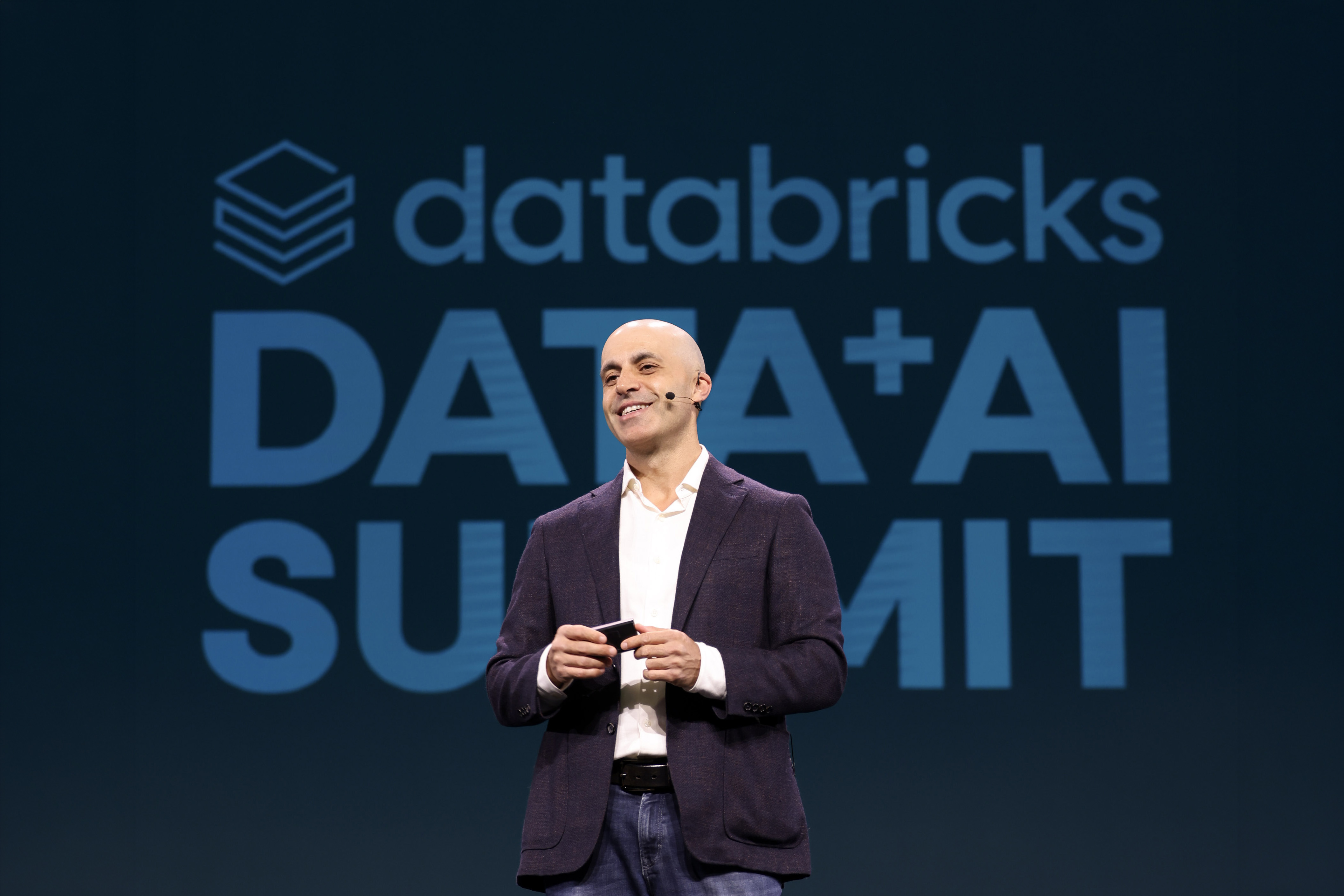
Agents need more than intelligence. Why we invested in Databricks
We are thrilled to announce our investment in Databricks and to partner with Ali Ghodsi and his entire team. Databricks sits at the center of the most critical architectural shift since the cloud: the transition from human-operated to agent-operated software. We believe they have built the only platform designed from first principles for this era.
At Premji Invest, our approach is rooted in developing a deep understanding of the product vision. When a technology stack shifts, we dig deep to understand where bottlenecks may develop and what capabilities can accrue value at scale. As enterprise agents move from concept to production, our thesis is clear: Databricks is evolving from a leading data and analytics platform into the foundational execution and governed context layer for the agentic enterprise. Critically, this is not a pivot away from the core. We view the lakehouse business as one of the largest beneficiaries of this shift across software, and it is reaccelerating rapidly as a result. On top of that base sit three strategic growth levers that together fulfill the vision of becoming the data fabric for the enterprise in the AI era: Lakebase for transactional workloads, Genie and the agent layer that governs and routes agentic work, and a new class of agentic applications built directly on the platform.
Enterprise AI has a context problem
Foundation models have become remarkably capable: they can write code, reason across multiple steps, and interact with external tools. However, intelligence alone cannot automate real enterprise work. Many AI agents fail in production due to poorly engineered context and missing access controls.
Historically, the enterprise data stack was built for human behavior: analytical query volumes scale with the number of data analysts, administrators pre-provision databases, and compute cycles are tied to rhythms of the human workday. Agents fundamentally break this paradigm. They issue exponentially more queries, spin up databases on demand, and burst compute 24/7.
Furthermore, agents lack the implicit context human employees possess. For example, they do not intuitively know which of the seven revenue definitions is correct or what the business means by "active customer." Letting agents reason over raw tables at runtime is slow, expensive, and unreliable. The true bottleneck is governed context: the accumulated semantic knowledge of the organization's entire data estate.
Agents need three things that the historical enterprise data stack does not provide:
- An operational foundation built for programmatic, bursty workloads
- Accurate answers grounded in governed context
- Economic control, i.e., forecastable AI budgets and the ability to route each task to the most cost-effective models (vs. sending all tokens to expensive frontier-models)
Unity AI Gateway and Genie Ontology
Databricks addresses this challenge through Unity AI Gateway, which helps companies control AI access, spend and observability across agents, tools, models, and MCPs. On top of it, Databricks has built the Genie Ontology, a live context layer and continuously constructed knowledge graph that extracts metric definitions, business terms, and asset relationships from the customer's own tables, queries, and documents.
This context is precomputed rather than retrieved at inference time. Genie Ontology does the extraction and ranking work continuously in the background, so at runtime, the agent reads a summary of what the organization knows instead of reasoning over raw data (expensive and slow). This approach has proven to yield significant cost and latency gains while simultaneously providing the fine-grained controls to securely make the enterprise data accessible to AI.
Databricks will monetize the entire agentic data stack across transactional and analytical workloads
As agents collapse the cost of creating software, the number of applications inside an enterprise is increasing exponentially. With agents, these applications are being instantiated on demand with unpredictable access patterns. Databricks' Lakebase is a modern take on OLTP that we believe is best positioned to be the default operational backend for this wave.
Lakebase is built on Postgres, the open-source database that has become the default foundation for modern applications and, increasingly, for AI agents. Postgres stands out for its customizability, extensive ecosystem of drivers, extensions, and migration tooling, along with the operational knowledge already sitting inside every engineering organization. Lakebase separates compute from storage, moving durability into object storage so the compute layer holds no durable state of its own. That is what lets Lakebase scale compute to zero when idle and come back on demand, which is exactly what agent workloads require. Agents can create, use, and abandon databases dynamically without anyone paying for provisioned capacity in between, and can safely test changes against instant, disposable copies of production data. Roughly 80% of databases on the Lakebase architecture are already created by agents rather than humans.
We see a growing number of workloads migrating to Lakebase because it is the only operational database that agents can provision programmatically inside a platform the enterprise has already governed. Beneath the operational data sits a larger body of information: documents, events, logs, traces, and embeddings. Because this operational context lands in an open format under the same catalog and storage as the rest of the company's data, it is immediately available for analytics and AI in the Lakehouse without having to build and manage brittle pipelines.
Growth durability: Databricks is an index bet on enterprise AI
We believe we are in the extreme early innings of enterprise AI adoption. Production deployment is constrained by data readiness, permissions, workflow redesign, reliability, and org change. Goldman predicts that enterprise agents alone (excluding consumer usage) could account for ~12x increase in token consumption vs. all tokens consumed today across enterprise and consumer.
Conventional forecasts underestimate Databricks by extrapolating solely from today’s human-driven workloads. We believe with high conviction that the market is getting this wrong, and that Databricks is positioned for faster, more durable growth.
Databricks does not need to predict which foundation model, agent framework, or end-user interface ultimately wins. As agentic activity scales, consumption cascades down the stack: agents require data ingestion and transformation (data engineering), data preparation and low-latency compute across heterogeneous data types (Lakehouse//RT, Photon, Spark, Delta, Iceberg), lifecycle governance (MLflow), orchestration (Agent Bricks), and post-execution analytics and reporting (SQL). Databricks monetizes the compounding compute cycles across the entire data estate.
Thus, every successful agent creates more demand for the core governance stack (Lakehouse, Data Engineering, SQL, ML) while accelerating adoption across all three growth levers: Lakebase in transactional workloads, the Genie and agent layer that routes and governs that work, and the agentic applications Databricks is now building directly on its own platform, beginning with customer data and security.
Partnering with a generational team
Ultimately, our conviction in Databricks rests on the team. Very few technology companies successfully crest more than one secular wave. Ali Ghodsi and the Databricks leadership have compounded execution for over a decade while repeatedly expanding the company's footprint into new categories: from big data with Spark, to the lakehouse architecture and data warehousing, to GenAI, and now to OLTP and the agent layer with model serving and routing. Databricks has won in each on the strength of a single coherent platform rather than a portfolio of disconnected products. What stands out most is that these waves are being caught nearly simultaneously rather than in sequence, which is what separates Databricks as an enduring franchise. We believe Databricks will be the data and governance foundation on which the agentic enterprise is built, and we are honored to partner with the Databricks team on that journey.
“Premji’s investment in Cohesity was more than just a validation of our long-term vision, but it also helped us drive innovation, provide excellent customer support, and attract strong leadership — the very things that drive our success as a company.”
“The definition of patient capital! It’s refreshing to work with a partner who advises us through a vantage point unobscured by the short-term vicissitudes that inevitably rock every industry.”
“A prepared mind beats a fast one. We would rather know a sector for ten years than a company for ten weeks.”


.png)
.png)
.png)
.png)


%20(1).jpeg)
.jpeg)


%20(1).jpeg)
.jpeg)
More from our theses, partners and portfolio.